top of page
.png)

Resources | River Mouths
FUN FACTS
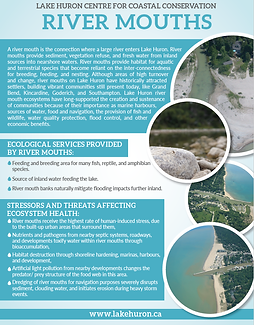
The connection where large rivers enter Lake Huron is the river's mouth. 31 large river mouths have been identified between Sarnia and Tobermory.
River Mouths have high rates of sediment deposition, and when this water moves farther out into the nearshore it can form a "plume". The plume shape leaving the river can vary greatly depending on the wind and wave conditions.
River mouths and associated aquatic habitats (e.g. coastal wetlands) experience the highest rates of anthropogenic stress compared to other aquatic habitats. They are among the most populated areas and therefore experience threats from development, invasive species, sedimentation from soil erosion, over-fishing, drainage and filling of wetlands, excessive nutrients from sewage and animals wastes, pollution and damming for flood control or water diversion.
It is very important that the water quality in river mouths is monitored, as it is the first indication of pollutants entering Lake Huron’s nearshore waters.
Publications and Factsheets
bottom of page